Understanding Betting Odds: Decimal, Fractional, and American Formats
For any bettor, from a casual sports fan to a dedicated punter, understanding odds is the fundamental step to engaging with betting markets. Odds tell you two critical things: the probability of an outcome and your potential payout. This guide provides a concrete, step-by-step explanation of the three main formats you’ll encounter: Decimal, Fractional, and American. Mastering these will help you make informed decisions and compare value across different platforms, including at estaves.si.
Decimal Odds: The Simplicity of Multiplication
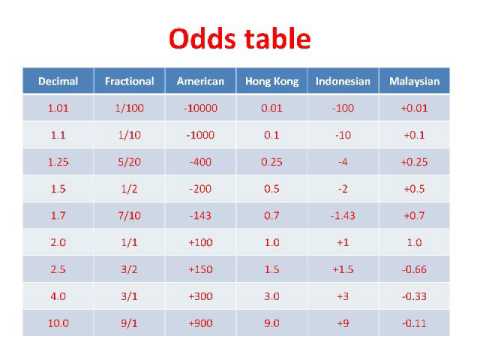
Decimal odds (e.g., 2.50, 1.80, 4.00) are the most common format in Europe, Canada, Australia, and for many esports and exchange betting sites. They are straightforward to calculate. Your total return (stake + profit) is simply your stake multiplied by the decimal number. For a €10 bet at odds of 3.25, your total return would be €10 * 3.25 = €32.50. Your profit is this return minus your stake: €32.50 – €10 = €22.50. The implied probability is calculated as (1 / Decimal Odds) * 100. So, odds of 2.50 imply a (1 / 2.50) * 100 = 40% chance.
Fractional Odds: The Traditionalist’s Choice
Common in UK and Irish horse racing, fractional odds (e.g., 5/2, 1/1, 10/3) show the profit relative to the stake. The number on the left (numerator) is the profit, and the number on the right (denominator) is the stake. Odds of 5/2 mean for every €2 you stake, you profit €5. A €10 bet at 5/2 would yield a profit of (10 / 2) * 5 = €25, plus your €10 stake back for a total return of €35. To convert to implied probability: Denominator / (Denominator + Numerator) * 100. For 5/2, that’s 2 / (2+5) * 100 = 28.57%.
American (Moneyline) Odds: Focus on the Favorite and Underdog
American odds, or moneyline odds, are centered around a $100 benchmark. They can be positive (+250) or negative (-150). Positive odds show how much profit you would make on a $100 bet. +250 means a $100 bet profits $250. Negative odds show how much you need to bet to profit $100. -150 means you must bet $150 to profit $100. For a non-$100 stake, the formula is: For positive odds: Profit = Stake * (Odds/100). For negative odds: Profit = Stake / (Odds/100). The table below provides a quick conversion guide for common prices.
| Decimal | Fractional | American | Implied Probability |
|---|---|---|---|
| 1.50 | 1/2 | -200 | 66.7% |
| 2.00 | 1/1 (Evens) | +100 | 50.0% |
| 3.00 | 2/1 | +200 | 33.3% |
| 4.50 | 7/2 | +350 | 22.2% |
| 1.20 | 1/5 | -500 | 83.3% |
Applying Knowledge to Bonuses and Real Betting
Understanding these formats is crucial when evaluating promotions. For instance, a welcome Estaves bonus might offer a 100% match. Knowing how to read the odds helps you assess which markets offer the best value to meet wagering requirements. If you’re using an Estaves no deposit offer or Estaves free spins winnings, calculating potential returns from different odds formats ensures you bet strategically. Always check the specific terms, as some bonuses may apply better to certain sports or odds ranges.
A Step-by-Step Guide to Comparing Value
To consistently find value, follow this practical checklist:
- Identify Your Preferred Format: Set your betting site profile (like at Estaves) to show odds in the format you understand best.
- Convert for Comparison: When checking multiple books, quickly convert all odds to decimal in your head or using an online tool for easy comparison.
- Calculate Implied Probability: Do the quick (1 / decimal odds) calculation. If you believe the true probability of an event is higher than this implied probability, you’ve potentially found a value bet.
- Factor in Promotions: An active Estaves promo code might give you extra cashback on a loss, effectively changing the risk profile of a bet with long odds.
Common Pitfalls and How to Avoid Them
The biggest mistake is misreading the odds format and misunderstanding your potential payout, especially when switching between sites. A common problem arises with fractional odds like 10/3, which newcomers can confuse with decimal. Another pitfall is not adjusting for the “overround” or bookmaker’s margin, which is baked into all odds. For example, the total implied probability across all outcomes in a football match will always sum to over 100% (e.g., 103%), with the excess being the book’s edge. Always be aware that odds are not pure probability, but a market-driven price.
Whether you’re exploring a new Estaves casino welcome offer or analyzing the horses, taking the time to master decimal, fractional, and American odds will put you on a more confident and calculated path. Remember, the format is just the presentation; the underlying value is what you’re truly betting on.
Comments are closed